Expense fraud is one of the most common and costly forms of occupational fraud. While a single inflated taxi fare or duplicate receipt may seem insignificant, repeated incidents can quietly drain company resources and create compliance risks. As businesses process higher volumes of expense claims, manual reviews are no longer enough. AI-powered expense management helps finance teams identify suspicious claims faster, reduce reimbursement errors, and strengthen financial controls without slowing down approvals.
Expense Fraud Isn’t Always Obvious
When people think of corporate fraud, they often picture large-scale financial scandals involving millions of dollars. In reality, many businesses lose money through much smaller, everyday actions that often go unnoticed.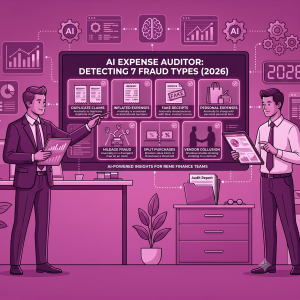
An employee submits the same hotel receipt twice. Another rounds up a mileage claim by a few extra kilometres. Someone includes a personal dinner on a business expense report, assuming it won’t be questioned. Individually, these claims may not seem alarming, but together they can create significant financial leakage over time.
Expense fraud is particularly difficult to detect because it hides within legitimate business spending. Finance teams are expected to review hundreds or even thousands of claims every month while ensuring employees are reimbursed quickly. Under these conditions, manually verifying every receipt, invoice, and mileage claim becomes both time-consuming and prone to human error.
As businesses continue to adopt hybrid work models and digital expense processes, the challenge has shifted from simply approving expenses to identifying which claims deserve closer scrutiny. This is where automation and artificial intelligence are changing the way finance teams manage reimbursements.
What Is Expense Fraud?
Expense fraud occurs when an employee intentionally submits false, inflated, duplicated, or unauthorized expenses for reimbursement. The goal is to receive money that they are not entitled to under the company’s expense policy.
It’s important to distinguish fraud from honest mistakes. Accidentally selecting the wrong expense category or uploading the wrong receipt is an error. Editing a receipt to increase its value or claiming a personal purchase as a business expense is fraud.
Common examples include:
- Claiming the same receipt more than once
- Altering receipt values
- Submitting fake invoices
- Claiming personal purchases as business expenses
- Inflating mileage or travel costs
- Splitting large purchases to avoid approval limits
While these actions may seem minor individually, they can weaken internal controls, increase audit workloads, and affect the accuracy of financial reporting.
Why Expense Fraud Is Increasing
Expense fraud isn’t necessarily becoming more common because employees are less trustworthy. Instead, the way businesses operate has changed, creating more opportunities for fraudulent claims to slip through.
Hybrid and Remote Work
Employees now travel between home, client sites, and regional offices more frequently. Finance teams often have less visibility into whether an expense was genuinely business-related.
Digital Receipts Are Easy to Duplicate
Paper receipts once provided a physical trail. Today, most receipts are digital files or photographs that can be copied, edited, or submitted multiple times if businesses rely solely on manual verification.
Growing Expense Volumes
As companies expand into new regions or hire more employees, finance departments must process increasing numbers of reimbursement requests. Higher volumes naturally make it harder to examine every claim in detail.
Faster Reimbursement Expectations
Employees expect reimbursements within days, not weeks. While quick approvals improve employee satisfaction, they also leave less time for manual reviews, making automation increasingly important.
7 Common Types of Expense Fraud
Understanding how expense fraud occurs is the first step towards preventing it. Here are the seven most common types finance teams encounter.
1. Duplicate Expense Claims
Duplicate claims occur when the same expense is submitted more than once. Sometimes this happens accidentally, especially if employees manage multiple expense reports. However, duplicate submissions can also be intentional.
For example, an employee submits a hotel receipt after a business trip. A month later, the same receipt is uploaded again as part of another reimbursement request. Unless finance teams compare previous claims, the duplicate payment may go unnoticed.
How AI helps
Modern expense management systems compare receipt images, merchant details, transaction amounts, and dates to identify duplicate submissions even when receipts have been renamed or slightly modified.
2. Inflated Expense Claims
Inflated expenses involve increasing the value of a legitimate business purchase.
Examples include:
- Editing a restaurant bill to include a higher tip
- Claiming a premium hotel room instead of the approved rate
- Reporting a longer taxi journey than was actually taken
- Increasing mileage travelled for client visits
Although the original expense may be genuine, the reimbursement amount exceeds what the employee actually spent.
How AI helps
AI compares expense claims with historical spending patterns, approved travel policies, and merchant information to identify unusual increases that warrant review.
3. Fake or Fabricated Receipts
Creating fake receipts has become easier with online editing tools and receipt generators.
Employees may fabricate receipts for meals that never happened, alter invoices, or submit entirely fictitious purchases. At first glance, these documents can appear convincing, especially when finance teams only conduct visual inspections.
Example
An employee claims reimbursement for a client dinner using a receipt generated online. The merchant exists, but the transaction never took place.
How AI helps
AI-powered verification can analyse receipt layouts, detect inconsistencies, compare merchant information, and identify signs of digital manipulation that manual reviews may overlook.
4. Personal Expenses Submitted as Business Expenses
This is one of the most common forms of expense fraud.
Employees may intentionally submit personal expenses including meals, shopping, entertainment, fuel, or travel as if they were incurred for business purposes.
In some cases, unclear expense policies contribute to confusion. In others, employees knowingly exploit weak approval processes.
For instance, an employee extends a business trip for a personal holiday and submits the entire hotel bill for reimbursement. Without supporting documentation or policy checks, finance teams may reimburse expenses that fall outside company guidelines.
How AI helps
Expense management software can automatically compare claims against company policies, merchant categories, approved travel dates, and spending limits, helping reviewers identify expenses that require additional verification.
5. Mileage Fraud
Mileage reimbursement is often based on self-reported travel distances, making it vulnerable to manipulation.
Common examples include:
- Reporting longer travel routes than were actually taken
- Claiming mileage for personal trips
- Submitting multiple claims for the same journey
- Recording client visits that never occurred
Because individual mileage claims are usually small, they can be difficult to detect through manual reviews alone.
How AI helps
By integrating with digital maps, GPS records, or route calculations, AI can compare claimed distances with realistic travel routes and highlight unusual discrepancies for review.
6. Split Purchases to Bypass Approval Limits
Many organizations set approval thresholds for expense claims. For example, any expense above $500 may require approval from a department head or finance director.
To avoid additional scrutiny, an employee may divide one large purchase into several smaller claims that fall below the approval limit.
Example
Instead of submitting a single $900 purchase, an employee files three separate claims of $300 over several days. Individually, each expense appears reasonable, but together they exceed the company’s approval threshold.
How AI helps
AI can identify related expenses based on merchant names, transaction dates, employee history, and spending patterns. By connecting these transactions, finance teams can spot attempts to circumvent approval workflows.
7. Collusion with Vendors
Vendor collusion is one of the most difficult forms of expense fraud to detect because it involves cooperation between an employee and an external party.
This may include:
- Inflated invoices
- Kickbacks from suppliers
- Billing for goods or services that were never delivered
- Duplicate invoices from the same vendor
These schemes often continue for months before they are discovered because the documentation appears legitimate.
How AI helps
AI can monitor vendor behaviour, identify unusual pricing trends, flag duplicate invoices, and detect payment patterns that differ from normal business activity, helping finance teams investigate suspicious relationships earlier.
Real Examples of Expense Fraud
Expense fraud can take many forms. Here are a few examples that finance teams commonly encounter.
Duplicate Travel Reimbursement
An employee attends a conference and submits hotel expenses through the company’s expense system. Weeks later, the same receipt is submitted again as part of another expense report. Without automated duplicate detection, both claims may be reimbursed.
Inflated Mileage Claims
A salesperson reports travelling 180 kilometres to visit a client, even though the actual journey was only 120 kilometres. Repeated over multiple trips, these inflated claims result in unnecessary reimbursement costs.
Personal Meals Claimed as Business Entertainment
An employee submits receipts for family dinners during a business trip and labels them as client meetings. Without supporting information, these expenses may appear legitimate.
Fake Receipts
Using an online receipt generator, an employee creates a restaurant receipt for a meeting that never took place. Manual reviews may not identify the fraud, particularly if the receipt format looks authentic.
Warning Signs Finance Teams Should Watch For
No single indicator confirms expense fraud, but repeated patterns should prompt closer review.
Some common red flags include:
- Multiple claims from the same merchant within a short period
- Frequent round-number expense amounts
- Repeated missing or unclear receipts
- Expenses submitted long after the transaction date
- Mileage claims that exceed realistic travel distances
- Repeated policy exceptions
- High-value expenses consistently just below approval limits
- Employees who frequently submit last-minute reimbursement requests
Identifying these patterns manually can be difficult, particularly as organizations grow. Automated expense management systems help surface these anomalies before payments are approved.
How AI Helps Detect Expense Fraud
Artificial intelligence doesn’t replace finance professionals, it helps them focus their attention where it matters most.
Instead of reviewing every claim individually, AI analyses thousands of expense reports in seconds and highlights transactions that deserve further investigation.
Key AI capabilities include:
Automated Receipt Verification
AI extracts information from receipts and compares it with submitted expense details to identify discrepancies.
Duplicate Detection
Receipt images, transaction values, merchant names, and dates are analysed together to detect duplicate submissions, even if receipts have been slightly modified.
Policy Compliance Checks
Expenses are automatically reviewed against company policies, spending limits, approval rules, and reimbursement guidelines.
Anomaly Detection
AI identifies unusual spending behaviour by comparing new claims with historical employee and department spending patterns.
Faster Audits
Rather than reviewing every expense manually, finance teams can focus on high-risk claims, improving efficiency while strengthening financial controls.
Best Practices for Preventing Expense Fraud
While technology plays an important role, preventing expense fraud requires a combination of clear policies, employee awareness, and effective internal controls.
Finance leaders should consider the following best practices:
- Establish a clear and accessible expense policy.
- Define approval workflows based on spending thresholds.
- Require supporting documentation for all reimbursement claims.
- Conduct regular internal audits.
- Train employees on acceptable expense practices.
- Monitor reimbursement trends and policy exceptions.
- Use automated expense management software to reduce manual reviews and improve visibility.
Creating a culture of accountability is just as important as implementing the right technology.
How REME Helps Finance Teams Stay Ahead of Expense Fraud
Managing expenses manually becomes increasingly difficult as businesses grow. Finance teams often spend valuable time reviewing receipts, following up with employees, and checking policy compliance instead of focusing on strategic financial planning.
REME simplifies this process by helping organizations automate expense management from submission to approval.
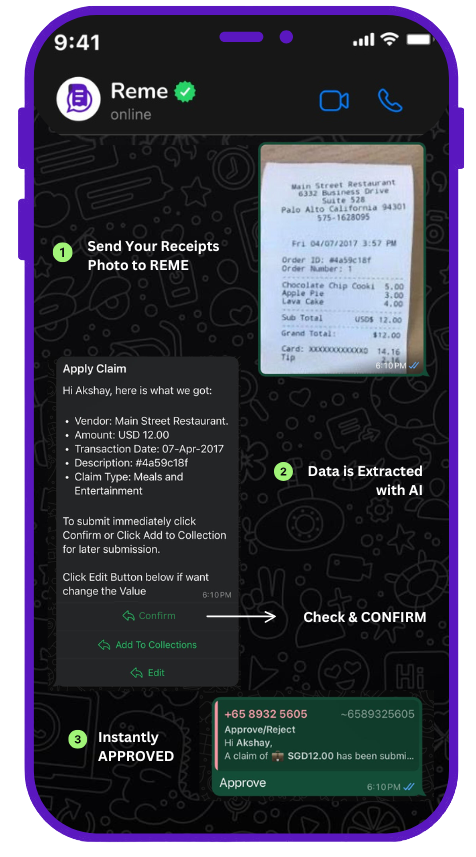
With WhatsApp-native expense submission, employees can submit receipts as soon as expenses occur, reducing delays and missing documentation. Automated workflows help route claims to the right approvers, while AI-powered verification supports finance teams by identifying duplicate receipts, policy exceptions, and unusual spending patterns for review.
Instead of relying solely on manual checks, finance teams gain greater visibility into reimbursement activity, faster approvals, and stronger financial controls, all while providing employees with a simpler expense submission experience.
Frequently Asked Questions
What is expense fraud?
Expense fraud occurs when an employee intentionally submits false, inflated, duplicate, or unauthorized expenses for reimbursement.
What are the most common types of expense fraud?
Some of the most common types include duplicate claims, inflated expenses, fake receipts, personal expenses claimed as business expenses, mileage fraud, split purchases, and vendor collusion.
Can small and medium-sized businesses experience expense fraud?
Yes. Businesses of every size are vulnerable. Smaller organizations may face greater challenges because finance teams often have limited resources to manually review every expense claim.
How does AI detect expense fraud?
AI analyses expense reports, receipts, merchant information, employee spending patterns, and company policies to identify unusual transactions and flag high-risk claims for review.
Is manual expense auditing still necessary?
Yes. AI supports finance teams by identifying suspicious claims, but human review remains essential for investigating flagged transactions and making final reimbursement decisions.
Conclusion
Expense fraud rarely begins with a major incident. More often, it starts with small, overlooked claims that gradually become recurring problems. Left unchecked, these issues can increase costs, delay audits, and weaken confidence in financial reporting.
As organizations process larger volumes of expense claims across multiple teams and locations, relying solely on manual reviews becomes increasingly difficult. Combining clear expense policies with AI-powered automation enables finance teams to identify suspicious activity faster, improve compliance, and streamline reimbursement workflows.
By investing in stronger expense controls today, businesses can reduce financial risk, improve operational efficiency, and create a reimbursement process that is both accurate and employee-friendly.
Looking to strengthen your expense management process? Discover how REME helps finance teams automate expense reviews, improve policy compliance, and gain greater visibility into every reimbursement, all from a platform your employees already use.